
Did you know? 8 fascinating facts about tulips
Every spring, they make their gentle return. Straight, colorful, proud—tulips announce the new season like few other flowers can. But behind their elegant silhouette lies a fascinating history, spanning continents, wars, famines… and even gourmet kitchens.
At La Pivoinerie Lili, we grow over 100,000 collector tulips every spring, in our fields in Saint-Albert, Centre-du-Québec.
And by living among them, we've learned to know them in a different way, far beyond their simple beauty.
Here are 8 fascinating facts about these flowers that you might soon find in your La Pivoinerie Lili pot.
1. They originated in the mountains of Asia over 3,000 years ago
Contrary to popular belief, tulips are not native to the Netherlands. They have grown wild for millennia in the mountains of Central Asia, between Turkey, Persia, and the plains stretching to the borders of China.
The first to cultivate them were the Ottomans, as early as the 10th century. Sultans had entire fields planted in their royal gardens, and the flower quickly became a symbol of prestige and refinement.
The name "tulip" comes from the Persian word delband, which means turban — a tribute to the rolled shape of its petals. Imagine: every time you say its name, you unknowingly evoke the silk adornments of Eastern sultans.
It wasn't until the 16th century that the flower crossed into Europe and captivated the Netherlands. The rest, you know: Holland would become its great global capital.
2. A gift of friendship offered to Canada in 1945
If Ottawa transforms into a vast sea of tulips every spring, it's thanks to a gesture of gratitude that spans generations.
In 1945, at the end of World War II, the Netherlands gifted Canada 100,000 tulip bulbs to thank Canadian soldiers for helping liberate the country. This tradition has continued every year since. The tulips in the Canadian capital remain one of the most powerful symbols of friendship between two nations.
On our scale, at La Pivoinerie Lili, we plant tens of thousands of bulbs every autumn to offer you a field that speaks the same language of spring: that of shared beauty, rewarded patience, and generosity that reblooms.
3. No tulip in the world is truly blue
It's surprising, but rigorously true: tulips exist in all the colors of the rainbow, except blue.
Why? Because there is simply no natural blue pigment in the flower. Varieties marketed under evocative names like "Blue Parrot" or "Blue Wow" are actually shades of purple, sometimes very close to blue, but never entirely.
At the other end of the palette, some varieties like the famous Queen of Night appear almost black — but it is actually an extremely deep purple, so dense that it plays with our perception.
Next time you stroll through our aisles, enjoy spotting all the shades there: from incandescent reds to delicate creams, through lustrous purples and sunny yellows of our collector varieties.
4. Their petals are edible
Yes, you read that right. Tulips are cousins of onion, garlic, and asparagus — all belong to the same large botanical family.
Some great chefs use their petals as edible garnishes in gourmet kitchens. They provide a crisp texture and a slightly sweet, subtle flavor that enhances spring salads, fruity desserts, and floral-inspired dishes.
At La Pivoinerie Lili, we long created a tulip jelly! A sweet and floral delight.
⚠️ Be careful though: you should never eat tulips from a florist or nursery — imported tulips are treated with chemicals that make them unsuitable for consumption. The bulbs themselves can also be toxic.
5. They continue to grow in water
Here is one of the most astonishing facts—and the easiest to verify at home: cut tulips continue to grow in their vase.
Unlike the vast majority of flowers, they can lengthen by up to 2.5 cm per day once placed in water. Their cells, stimulated by light, stretch the stem as if the flower is still reaching for the sky.
That's why a bouquet of tulips is never quite the same two days in a row. Place your bouquet near a bright window and observe: you will literally see your flowers grow day by day, sometimes tilting their heads as if seeking your gaze.
This is one of the small, discreet pleasures that come with a La Pivoinerie Lili pot filled with freshly picked tulips: the living spectacle that takes up residence in your home for about ten days.
6. They move with temperature
Tulips are thermonastic: a fancy word that hides a phenomenon close to magic. Their petals open when it's warm and close when it's cold, to protect their precious pollen.
Try it at home: place your bouquet in a cool room in the evening, then observe it the next morning, in the light. The flowers blossom as if by magic, then gently close at nightfall.
This is exactly what they do in our fields. If you visit La Pivoinerie Lili on a sunny May morning, you will witness this silent ballet: the 100,000 tulips opening in unison before your eyes over the hours, then bowing with the first coolness of the evening. It's one of the most beautiful spectacles of the season — and one of the reasons why self-picking is an experience to live, not just to watch.
7. Over 3,000 varieties worldwide — and ours are exceptional
Today, there are over 3,000 varieties of tulips cultivated worldwide. The Netherlands alone exports more than 2 billion bulbs each year.
At La Pivoinerie Lili, we have made precise choices. We cultivate collector varieties that you will never find in commercial stores:
❀ Fringed tulips: their serrated petals look like they've been cut with scissors — a delicate, luminous texture that catches the light.
❀ Parrot tulips: crumpled, bicolored, flamboyant — a tribute to the exotic feathers of tropical birds.
❀ Peony tulips: double, opulent, generous — they resemble miniature peonies (our favorites, of course).
❀ Princess tulips: all grace and tapered petals, elegant like royal crowns.
Each autumn, we carefully choose the bulbs we will plant for you to pick the following spring. Each variety is selected for its beauty, its vase life, and its unique character. These are not grocery store tulips — these are artist's tulips, floriculture tulips, true beauties!
And since they are picked in colored bud, directly from our fields, they last much longer in your home than commercially opened ones. This is our signature: maximum freshness.
8. 100,000 tulips await you at La Pivoinerie Lili in May 2026
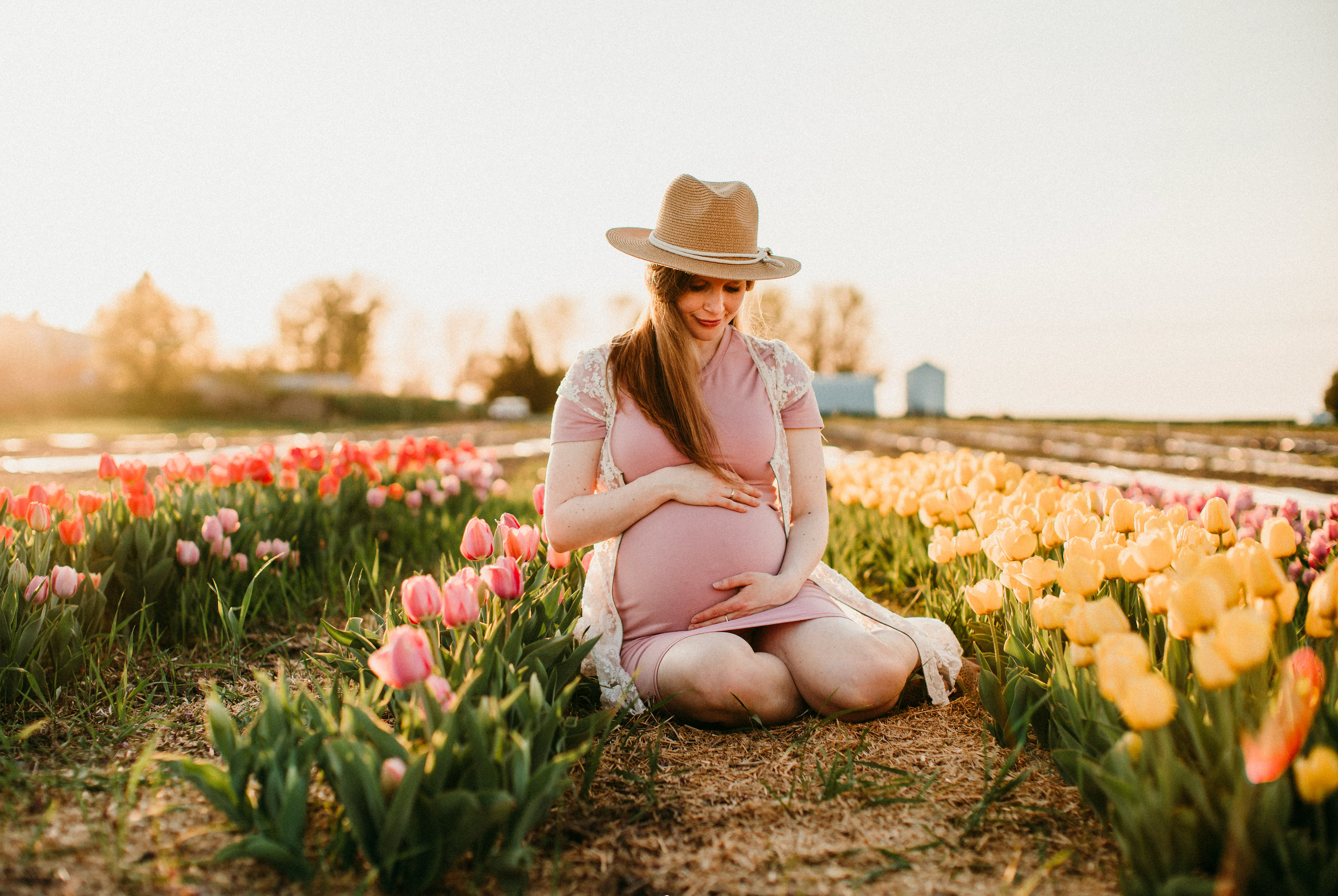
And to crown this little floral odyssey: here, 100,000 tulips bloom for you this spring in our fields in Saint-Albert.
One hundred thousand opportunities to marvel. One hundred thousand variations of colors, shapes, textures. One hundred thousand reasons to come and meet them — with family, with friends, or simply to offer a moment of beauty to someone you love.
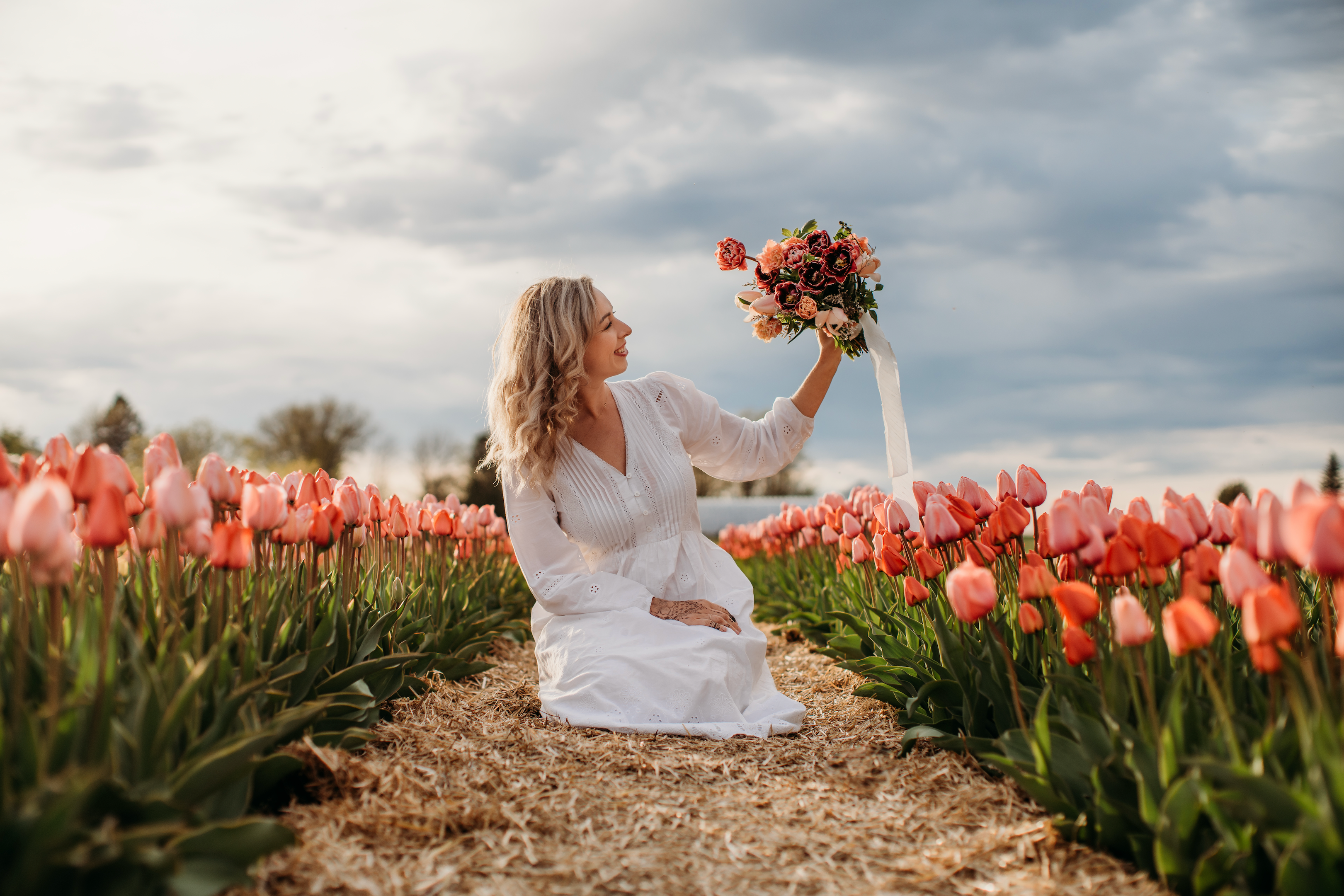
At La Pivoinerie Lili, tulip picking is an immersive experience. You stroll between the rows, choose your flowers one by one, and leave with your La Pivoinerie Lili* pot filled with the beauty you have created yourself. Each tulip is picked in bud for maximum longevity in your home — it will open quietly in your vase and accompany you for up to 10 days.
For those who prefer to leave with a ready-to-offer arrangement, our indoor tulip bar also allows you to compose your customized bouquet, in warmth, at your own pace. Pre-made bouquets are also available in the shop.
This art of picking is not insignificant. It reconnects you to the earth, to the season, to patience. This is the soul of Quebec agrotourism — and this is what we want to share with you, season after season.
See you in spring 2026
The 2026 tulip season at La Pivoinerie Lili will take place:
❀ From May 7 to 10 — special Mother's Day weekend - tulip self-picking